A Shiver of Wonder by Derick Bingham
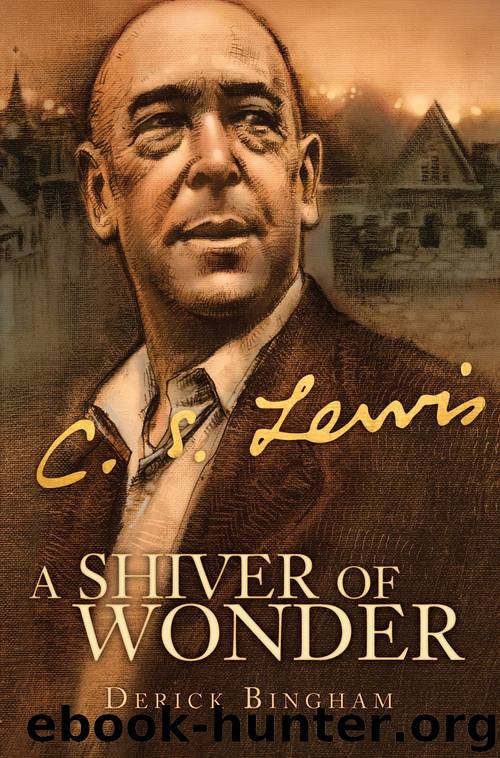
Author:Derick Bingham [Bingham, Derick]
Language: eng
Format: epub
Tags: Biography
Publisher: Ambassador International
Published: 2017-07-08T16:00:00+00:00
Chapter Eleven
ON FINDING YOU ARE AWAKE
ACROSS ENGLAND IN 1924, MAY was flourishing in all her glory. The bluebell of England, known before the rose as “the flower of St. George” and worn by the Greeks as a token of remembrance, was blooming in all its loveliness.
Other seasonable plants were in flower; perhaps, next to the bluebell, the most prolific on bank and forest floor was the primrose, with its thread-like stem. The “mayflower” was also flourishing. This was the hawthorn, of course; its beautiful white flower and thorny branches develop small, apple-like fruit that ripen to bright red in the autumn. As a cardiac tonic, hawthorn has been valued since as early as the first century; hawthorn berries have even been called “food for the heart.” Hawthorn remains one of the most popularly used botanical medicines for heart conditions throughout Europe. It increases the flow of blood to and from the heart and has also been known to relieve sleeplessness caused by nervous tension.
The most delicate flower in May, with its white, purple-veined, drooping little cup had bloomed on the banks of the forests. It is less well-known than any other spring flower, and it is extremely fragile. It is called the wood sorrel, but in olden times it was called alleluya. This is a very appropriate name for the jewel-like flower now joining the rest in praise of the joyous bursting of Maytime across England.
On 20 May 1924, Albert Lewis felt like shouting alleluya. A telegram had arrived at Little Lea which read “Elected Fellow Magdalen. Jack.” Albert recorded in his diary that he went into his room and burst into tears of joy; and then he knelt down and thanked God with a full heart. In Magdalen Church tower in Oxford, the choir of Magdalen College had sung at dawn on Mayday; and over at University College a full-time job had just been offered to an Ulsterman. It could not have come at a better time for Jack. All he had to live on was his father’s allowance of £85 a year and his earnings from grading school examination papers and tutoring one student at University College. It did not amount to much for a man who had to care for a girl at school and her mother.
The Philosophy tutor at University College, Edgar F. Carritt, was going to the University of Michigan for the academic year 1924-25. He was to leave in the autumn, and Jack was asked to deputise for him. Jack’s duties were to lecture twice a week for a term of seven weeks, a total of fourteen hours of lecturing. His subject was “The moral good: its place among the values.” As far as his audience was concerned, by February 1925 it comprised wo people, one of whom was an extremely garrulous clergyman. Jack brought them to his rooms and allowed them to interrupt him any time they liked. The clergyman virtually took over!
During his year of deputising for E. F. Carritt, Jack applied for all the fellowships in philosophy and English that the Oxford Colleges were offering.
Download
This site does not store any files on its server. We only index and link to content provided by other sites. Please contact the content providers to delete copyright contents if any and email us, we'll remove relevant links or contents immediately.
Cecilia; Or, Memoirs of an Heiress — Volume 2 by Fanny Burney(31962)
Cecilia; Or, Memoirs of an Heiress — Volume 3 by Fanny Burney(31945)
Fanny Burney by Claire Harman(26607)
We're Going to Need More Wine by Gabrielle Union(19055)
Plagued by Fire by Paul Hendrickson(17417)
All the Missing Girls by Megan Miranda(16052)
Cat's cradle by Kurt Vonnegut(15365)
For the Love of Europe by Rick Steves(14177)
Bombshells: Glamour Girls of a Lifetime by Sullivan Steve(14081)
Leonardo da Vinci by Walter Isaacson(13342)
4 3 2 1: A Novel by Paul Auster(12405)
The remains of the day by Kazuo Ishiguro(9006)
Adultolescence by Gabbie Hanna(8931)
Note to Self by Connor Franta(7673)
Diary of a Player by Brad Paisley(7587)
Giovanni's Room by James Baldwin(7354)
What Does This Button Do? by Bruce Dickinson(6210)
Ego Is the Enemy by Ryan Holiday(5456)
Born a Crime by Trevor Noah(5385)
